
As people made their way down the infamous Trajan’s Market, they could simply not ignore the stench of the city. The streets were narrow, hot, and overcrowded as soldiers, civilians, and aristocrats filled them with life. Peddlers and customers were common sights out there as well. In the middle of the commotion, you could even hear the roars coming from the Colosseum as one gladiator won their life and another met their demise. This was life back in Ancient Rome. Most people have a vague understanding of this important time in history, though this is a culture worth taking a closer look at.
Read on to clarify some of the common misconceptions people have about Ancient Empire. Let’s get to it!
Gladiator Fighting Was Not The Most Popular Sport Back Then
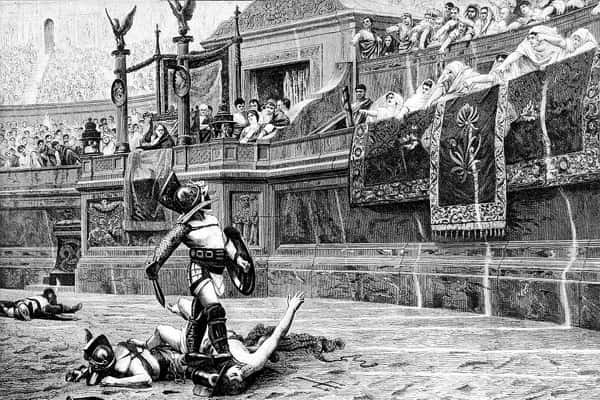
The first that comes to mind when discussing entertainment in Ancient Rome would be gladiator fights in the Colosseum. The fighting to the death certainly thrilled many members of the Roman public, though it was not the most popular sport back then. While the size of these games and the brutality displayed had been incredible, not everyone was fond of it. Chariot racing was actually the most popular sport in those days. It is impressive to hear that the Colosseum had a seating capacity of 50,000 people but that is nothing compared to the most famous chariot racing venue. The Circus Maximus could actually seat up to 250,000 people!
Gladiator Fighting Was Not The Most Popular Sport Back Then
The Life Expectancy of the Average Roman
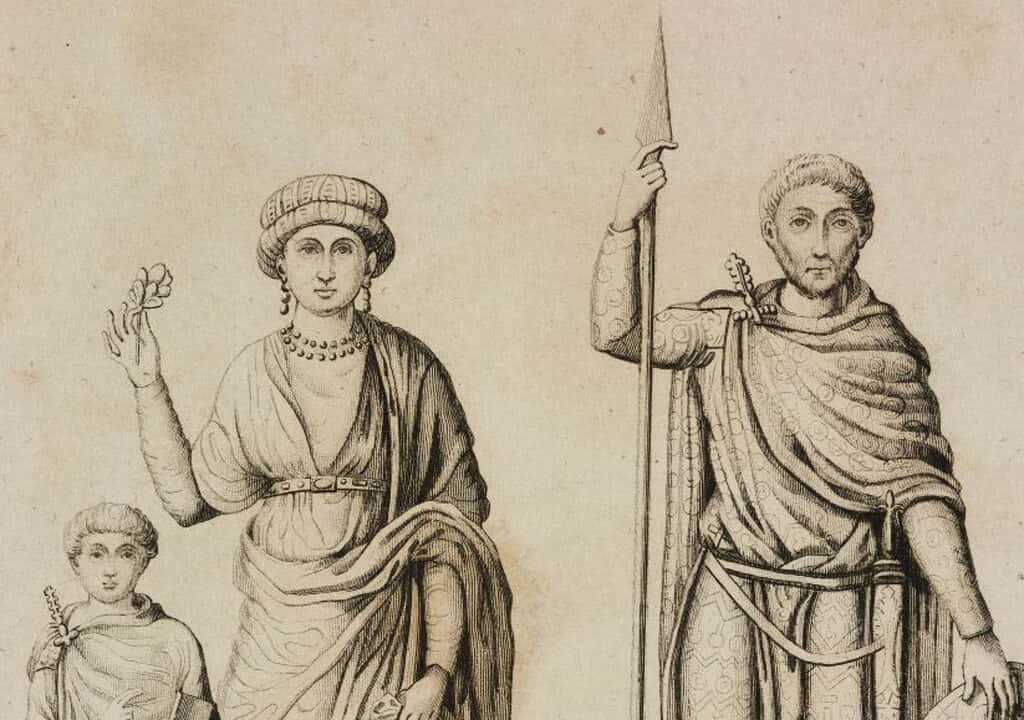
It is true that Rome was technologically advanced, though that apparently does not equate to sanitary living conditions or surroundings. In fact, this may have something to do with the historians’ belief in the unbelievably low life expectancy of Ancient Rome at only 25 to 40 years old! However, this was a huge misconception since these digits actually refer to the lifespan of the whole population instead of the individual life expectancy. Regardless, Ancient Rome had an extremely high child mortality rate with half of the population dying before they turned ten years old. If you managed to live past this mark, however, you were almost guaranteed to enjoy a long life. The low average could also be attributed to the military deaths and childbirth fatalities.
The Life Expectancy of the Average Roman
The Predecessor of Christmas, The Saturnalia
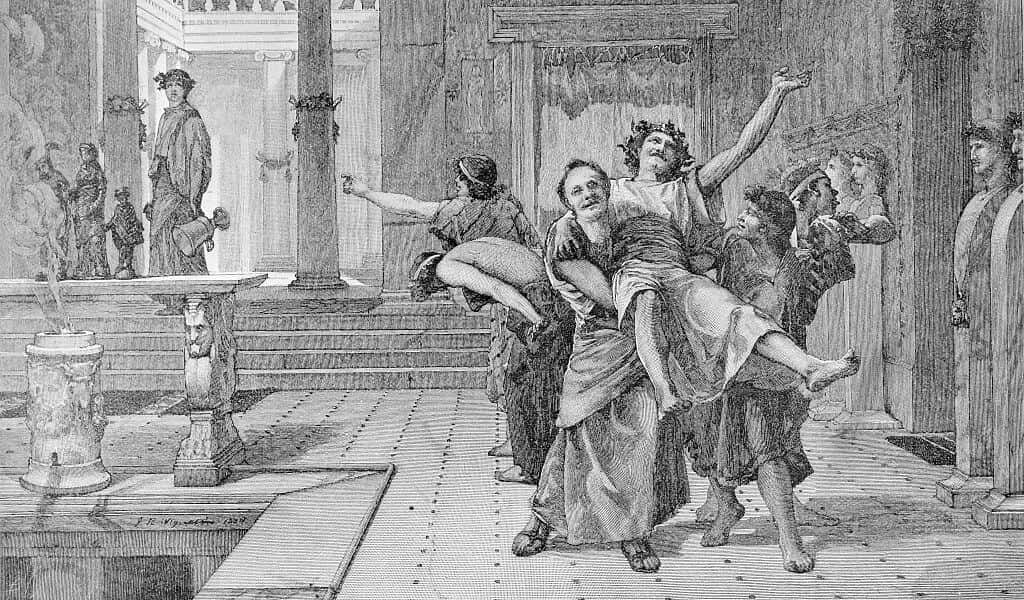
Saturnalia was an annual pagan festival that commemorated Saturnalia, the god of agriculture, in mid-December. The Roman tradition was celebrated as a weeklong celebration where people dropped work in order to partake in gift-giving, decorating, and other events. The festival is suspected to be the predecessor of Christmas as we know it and it typically started on the 17th of December. Many people decorated their homes with wreaths and greenery and they changed out of the clothes they regularly wore. Even slaves ceased to work and received permission to take part in the festivities, even switching places with the masters in some cases! Yes, it was basically one of the greatest parties the West has ever seen and we wish we could have attended it.
The Predecessor of Christmas, The Saturnalia
Who Were The Vestal Virgins?
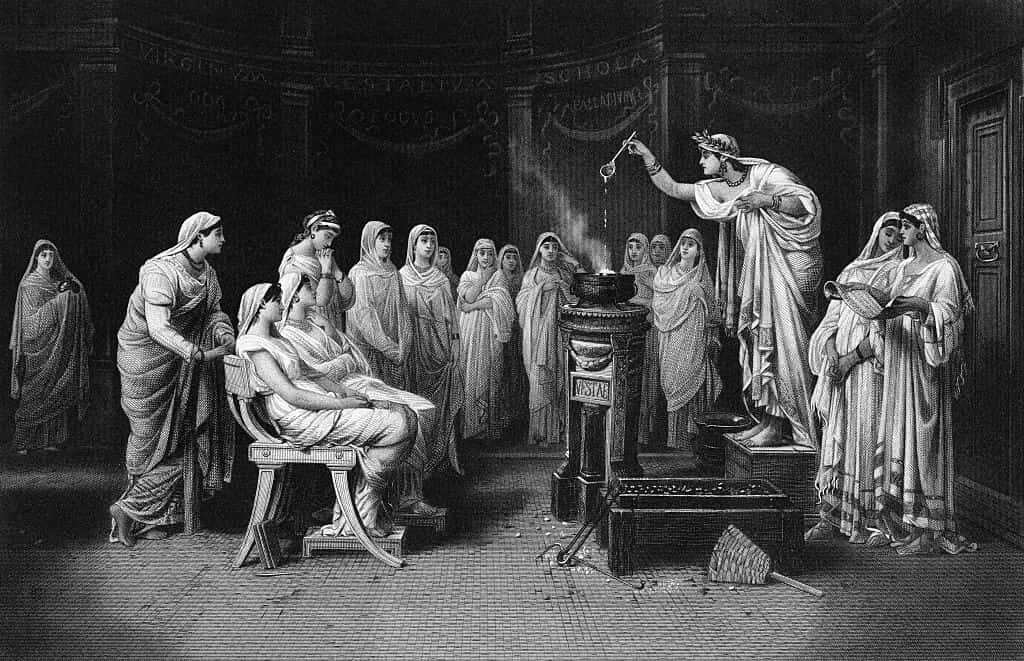
In Ancient Rome, the Vestal Virgins had been an order of priestesses devoted to Vesta, the Roman goddess of the hearth. At any given time, you would likely find four to six priestesses working in the order full-time. The duties involved caring for the sacred fire, attending to the sacred artifacts, and facilitating public events that had to do with Vesta. The chief priest selected the Virgins when they were only aged six to ten. After being chosen, they had to render service for three decades, during which they were expected to remain chaste. As soon as the thirty years were done, they were free to leave but few chose to do so. Any Vestal Virgin who failed in her duties received severe punishments and beatings. Even worse, those who broke their vows of chastity were either buried alive or forced to swallow molten lead!
Who Were The Vestal Virgins?
The Importance Of Urine In The Ancient Roman Empire
In this day and age, a public bathroom is already bad but can you believe Ancient Romans had to pay taxes in order to use public facilities? Emperor Nero, followed by Vespasian, first passed the tax called vectigal urinae AKA the urine tax. Interestingly, they did not let the urine go to waste as they actually collected the urine from both private and public places in pools for the purpose of recycling. In the past, urine was actually used to clean animal pelts as it was effect when it came to removing the hair fibers from the pelt. We know this might sound like a joke but urine was also used for laundry thanks to its ammonia content!

The Importance Of Urine In The Ancient Roman Empire
The Legendary Brothers Who Founded The City of Rome
Have you heard the legend about the demi-god twin brothers, Remus and Romolus? Ancient Greek mythos has it that Rome was founded by the two on April 21, 753 BCE. They were allegedly the kids of Mars and Rhea Silvia. When they were infants, their grandfather allegedly ordered his men to throw the little boys into the Tiber River. A she-wolf rescued them and they were eventually discovered and raised by a herdsman. When they grew into fine young men, they killed King Amulius of Alba Longa and presented the throne. The two refused and decided to build their very own city in the most ideal location they could find. They began arguing about where to set it up until Romulus slayed Remus and named the new city after himself. Of course, one should take the myth with a grain of salt but it is entertaining nonetheless.

The Legendary Brothers Who Founded The City of Rome
Gladiator Blood As Medicine
When it comes to health and hygiene, let’s just say that these things weren’t the strong point of Ancient Rome. Considering the fact that people brushed their teeth using urine and shared wiping sponges in the public baths, nothing appeared to be out of the question. Back in the first and sixth centuries, Romans believed that consuming the blood or liver of a gladiator could cure epilepsy. The blood of a fallen gladiator could allegedly clean their souls and this was the key to curing the condition. In those days, it was pretty common to find warm gladiator blood for sale, fresh from the fight in the arena. We’ll have to say no thanks to that!

Gladiator Blood As Medicine
Goddess Of The Drains and Sewers
Can you believe that the Ancient Romans even had a goddess of the drains and sewers of Rome? Cloacina, “The Cleanser”, allegedly presided over the main sewer system of Ancient Rome called “The Great Drain” or the Cloaca Maxima. She was originally a part of the Etruscan pantheon but later adopted by the Romans and associated with the Goddess of Love, Venus. As time passed by, Cloaca also ended up becoming the protector of marital sexual intercourse and the goddess of purity at the same time. There exists a shrine dedicated to her right above the entryway to the Cloaca Maxima Sewer in the same spot where historians speculate an older one used to stand.

Goddess Of The Drains and Sewers
The First Shopping Mall Was Invented In Ancient Rome
It is assumed that the first ever shopping mall in history was none other than Trajan’s Market. It is believed that it was constructed sometime around 100 to 110 AD by the architect Apollodorus Damascus. He was a good friend of Trajan and he was entrusted to build the Forum, a huge complex located right on the Via dei Fori Imperiali at the end of the Colosseum. Inside, there were shops, a covered market, and even a residential apartment area. Later on, more levels were eventually built, more residential blocks were added, and more establishments were opened. While it used to be the busiest part of the city, it is nothing more than a complex in ruins these days.

The First Shopping Mall Was Invented In Ancient Rome
The Discrimination Against The Lefties
These days, it would be more accurate to call left-handedness an inconvenience than a true problem. Unfortunately for the lefties in Ancient Rome, that wasn’t the case. As a matter of fact, they were deemed wicked and suspicious compared to everyone else! They were treated with suspicion and generally considered to be deceitful thanks to their abnormality. You might hear certain people claim how left-handed Romans were treated with respect but this is not true. The reality was that left-handed individuals faced so much discrimination that people had to slip on their wedding bands on the third finger of their left hand in order to avoid sins from lefties.

The Discrimination Against The Lefties
A God To Help You With Your Bowel Movement
We’ve already talked one obscure goddess but it’s almost unbelievable to hear they had a god for farting! Crepitus was the god of flatulence in the Roman pantheon, sources say. He was normally invoked when one needed help moving bowels. You might want to take that with a grain of salt, however. Scholars believe he was never worshipped in the traditional sense of the word. Some even think he might have only been the invention of a satirist writing about Roman culture! Nonetheless, this has not been verified and Crepitus has been referenced in many French literature works.

A God To Help You With Your Bowel Movement
The Longest War The World Has Ever Seen
Did you know that the Roman Empire was on one end of the longest conflict in history? The Roman-Persian Wars went on for about 721 years and the Roman Empire maintained a mostly solid frontier throughout the whole lengthy ordeal. The Parthian Empire and the Roman Republic started going to war with each other as early as 66 BC! More major fights happened during the course of the Sasanian Persian and Roman empires. The excessively long ordeal ended in depleted resources and plenty of casualties. The Roman-Persian wars ultimately flickered out by the time the Arab Muslim Conquests began in 628 AD.

The Longest War The World Has Ever Seen
Dining While Laying Down On The Floor
Unlike us, Romans did not like eating at the table. Meals were typically enjoyed lying down and scooping the food with their bare hands but only if they could afford it. The wealthier people of Ancient Rome were the ones who enjoyed eating in the aforementioned relaxed manner and only primarily the men. In fact, women were not typically asked to go to nice banquets and they had to eat upright when they were. Customs eventually changed and upper-class women later became free to enjoy the food while laying down if they so wished. Eating a pleasant meal this way was considered a status symbol of sorts back then!

Dining While Laying Down On The Floor
You Would Not Believe Who The Atheists Were Back Then
We already know that the inhabitants of Ancient Rome worshipped numerous gods and goddesses, though there were certain people considered to be the early Christians. How ironic is it that the very same people would have been called atheists since they did not worship any of the pagan gods! There was more to the label than the fact that the early Christians did not pay tribute to the traditional pagan gods, however. Back then, this group of people did not actually follow an organized religion so they had no shrines, temples, and religious leaders. They were therefore separated from the rest of society, often as a result of malicious rumors.

You Would Not Believe Who The Atheists Were Back Then
Soldiers Were Paid Their Salaries In Salt
Interestingly, “salary” can be derived from the word “salarium”, which means “salt” in Latin! If you’re wondering how these two things are connected, the answer is that the soldiers had been paid in salt during the Roman Empire. There has been no solid proof found to confirm this although scholars generally agree this was true. In those days, salt was a hot commodity so it would make sense if it was used in lieu of currency. As a matter of fact, scholars believe it was used to purchase slaves as well.

Soldiers Were Paid Their Salaries In Salt
The Hottest Skincare Product Was Gladiator Sweat
You have already read how urine had been used to wash dirty clothes and gladiator blood had been consumed to cure epilepsy. However, it seems like the ancient Romans let no body fluids go to waste as they also collected the sweat of gladiators! Outside the arena, vendors selling gladiator sweat in vials had been a common sight. Their customers were primarily wealthy ladies who used it as some sort of face cream! A tool called strigil was normally used to scrape the dirt and sweat off the skin of popular gladiators, though not everyone had access to such products. It must have cost a fortune and they were pretty much reserved for women of status.

The Hottest Skincare Product Was Gladiator Sweat
Respect Your Elders… Or Else
It is true that one must respect their elders, though there were serious repercussions if you failed to do so in ancient Rome. When it comes to this matter, nothing can beat the act of parricide, also known as the slaying of one’s relatives or parents. If one commits this crime under the Roman Empire, one was punished with Poena cullei. People afraid of enclosed spaces and drowning must have been terrified of it as the punishment entailed being sewn up in a leather sack before being thrown into the sea. Apparently, there were even cases when offenders had been sewn up with a variety of live animals!

Respect Your Elders… Or Else
The Ancient Romans Got High… On Fish!
You can bet that the ancient Romans partied harder than anyone. Can you believe they even resorted to consuming fish in order to get high? The fish in question is none other than the salema porgy fish. This fish possesses hallucinogenic properties that have been revealed to induce LSD-like effects in the people who consume it. The fish was therefore used as a recreational drug of sorts by the inhabitants! We don’t recommend following in their footsteps, however. People who eat this fish rarely experience any trips, likely due to the fact that people learned how to prepare it in a safe manner. Yay or nay?

The Ancient Romans Got High… On Fish!
Ahead Of Their Time In Some Ways
Isn’t it fascinating to hear how the inhabitants of the Roman Empire didn’t really care much about same-sex marriage? Emperor Nero, the reigning leader for 13 year, actually married two men! During one Saturnalia, he married a freed man called Pythagoras and took the place of the wife in the marriage ceremony. Let us not forget that he did marry a couple of women but when he murdered one of them, he found a young boy called Sporus to replace her. In fact, he even got Sporus castrated so he would be more womanlike!

Ahead Of Their Time In Some Ways
Not As Great As They Made It Sound
Considering how much we heard about the Roman Empire, we bet it sounds like such a huge place. However, records actually show otherwise! When you compare it with other empires in history, it is only the 28th when it comes to size. Moreover, the Roman Empire accounted for only 12% of the global population when it reached its peak. In reality, the Roman Empire was rather small but let us not forget to give it the credit it deserves. After all, the empire did manage to exist for hundreds of years even if it was smaller than the rest of the planet.

Not As Great As They Made It Sound
The Greatest Horse In The History Of Ancient Rome
Gaius Caligula was so fond of Incitatus, his horse, that he made it a senator! At least that is what it looks like based on the records of ancient historian Suentonius. The pet horse was so well-loved that Caligula even gave him an ivory manger, marble stalls, and a house of his own. Incitatus even had a lavish jeweled collar and fed only oats mixed with gold flakes. Numerous scholars tried to discredit the story by suggesting that the bit about the horse as a consul was a mere joke. Regardless, the emperor truly did love the horse so much so no one really knows.

The Greatest Horse In The History Of Ancient Rome
Sharing A Poop Sponge With Your Friends And Strangers
By now, we already know that the Roman Empire could all do with a hygiene lesson or two. Maybe this is why it is not all that shocking to hear how some men shared a communal sponge on a stick when they had to clean themselves after taking a dump! Second, yup, we really did say communal. This disgusting special sponge was called a tersorium and you can bet it touched plenty of people during its time it was being used in public latrines. They did wash it using salt water, bucket, and vinegar but that did nothing to suppress the spread of disease.

Sharing A Poop Sponge With Your Friends And Strangers
A Three-Day Vacation To Avoid Turning Into Property
The wives of the Roman Empire needed to stay extra vigilant whenever they needed to leave their home for three days. After all, the “usacpio” law was enacted and it dictated the amount of time one could possess an object before it legally became yours. Uh-huh, that means a wife staying in her home for a year legally became the property of her husband. Luckily, the women felt entitled to freedom so they left their homes for several consecutive days to prevent the status change from happening.

A Three-Day Vacation To Avoid Turning Into Property
Fathers With Excessive Amount of Rights Back Then
During the earlier days of the empire, there were few laws that prohibited fathers from doing just about anything they felt inclined to do. Among other things, these men could force both marriages and divorces, sell his children into slavery, and abuse – maybe even kill – members of his family. Fathers also had the ability to abuse children who misbehaved, though these kind of behaviors occasionally turned into murder. Back then, laws did not prohibit such uncouth behavior but people realized their mistake once the first century BC had come to pass. Even when they managed to put some laws in place, fathers could still kill their sons for committing a crime.

Fathers With Excessive Amount of Rights Back Then
No One But Royalty Could Wear The Color Purple
Purple has always been the color of royalty and the members of higher status so it’s not surprising to hear it was also true in Ancient Rome. The emperors typically wore purple togas and similar outfits, though no one else could do the same thing. As a matter of fact, this was treated so seriously that it became official as one of the “sumptuary laws” that prevented members of the lower class from displaying any forms of extravagant wealth. The laws were made so it would be possible to tell the social standing of an individual just by looking at them. Apparently, there was no reason to waste your breath being polite to a peasant.

No One But Royalty Could Wear The Color Purple
Fathers Were Allowed To Sell Their Children Into Slavery
Ancient Roman dads sure put their kids to work, though some took it too far by selling them into slavery. The arrangement of the whole thing is comparable to a lease since the buyer needed to return the child after a while. This was apparently common behavior back then, though there were certain limits as well. For example, one could only lease the same child up to three times. Anything more than would grant someone the status of an unfit father from whom a child had to emancipated from. That’s why some people thought it was very helpful to have more children so they could lease them off twice.

Fathers Were Allowed To Sell Their Children Into Slavery
Pray You Never Get Struck By Lightning
If someone in the Roman Empire got struck by lightning, there really isn’t much they could do about it. This must have sucked for people who watched their friends be struck by lightning as they could not even help those people get a proper burial. If you feel confused why this is, it actually happened because the ancient Romans believed that a lightning strike was delivered by the god Jupiter. Anyone who was struck by lightning must have done something to displease the god. Yup, even deaths were considered to be human sacrifice back then. Make sure to pay tribute to Jupiter or you might be the next victim!

Pray You Never Get Struck By Lightning
The Punishment For Adulterous Women
It is an extremely unpleasant experience to be cheated on by the person you love, though it has been happening for as long as marriage has been around. The wife could only cry when it happened to her, though the same did not ring true in a reversal of roles. When a woman cheated on her husband, she had to pay a huge price. Sources say that the husband typically locked up the wife and the lover together. The husband then made a public declaration regarding the affair, offering the people in attendance as much detail as possible before they could even get a divorce.

The Punishment For Adulterous Women
Banning Crying At Funerals
A regular funeral in Ancient Rome often began with the procession. People used to walk alongside the deceased body through the streets of the city and openly wept while they were at it. Back then, the number of people mourning during the procession acted as a sort of final status symbol. A lot wanted to impress their attendees and even asked family members to pay for mourners to join the legitimate grievers. Apparently, some of these women actors got so involved in the role that they scratched their faces and ripped out their hair. That sounds intense, though they later tried to outlaw this by banning crying at funerals.

Banning Crying At Funerals
Lower Income Inequality Than In Present-Day America
Historians have talked about how evenly spread out wealth was in Ancient Rome back then. Apparently, the U.S. Research revealed how the one percent of earners only made up 16% of the national wealth in Ancient Rome. For the sake of comparison, 40% of the wealth of the United States is presently controlled by the people in the top one percent. Studies have revealed that while this helped expand the empire, it also helped bring the collapse of the Roman Republic later on. The rich people got richer and the poor people got poorer. With the arrival of Julius Caesar, however, things began to change.

Lower Income Inequality Than In Present-Day America
Misconceptions About The Diets Of The Early Christians
As we already know, the refusal of the early Christians to pay tribute to the traditional pagan gods made them atheists. Apparently, however, the ancient Romans had yet another negative impression regarding this new religion. The ancient Romans apparently believed these people were cannibals! This likely stemmed from the way they “drank” the blood of Christ and ate his body during communion. The early Christians later invited Roman officials to sit and observe the practice to prove that it did not involve eating and drinking the flesh and blood of any human beings.

Misconceptions About The Diets Of The Early Christians
Emperor Caligula And His Relationships With His Dear Sisters
Emperor Caligula was the leader of the Roman Empire from AD 37 to AD 41. His reign is well-known thanks to the scandal and controversy brought about by his tendencies towards perversion, sadism, and luxurious lifestyle. Caligula also enjoyed the pleasures of the flesh and liked to go to bed with the wives of other men. Apparently, he even committed incest with his sisters Livilla, Drusilla, and Agrippina the Younger! There were even reports how he sold his siblings to other men. However, keep in mind that the outrageous stories about the emperor has yet to be proven. One expert said, “a lot of the evidence is pretty shaky” but it sure is very interesting stuff, isn’t it?

Emperor Caligula And His Relationships With His Dear Sisters
Flamingo Tongues As A Local Delicacy
For Ancient Romans, flamingo tongues were considered to be a fantastic delicacy. Pliny the Elder actually wrote in the Encyclopedia of Natural History that a particular food-lover said they have “a specially fine flavor”. Whole flamingos were actually eaten and a cookbook from the time included instructions on how to turn the bird into a meal: “Scald the flamingo, wash and dress it, put it in a pot, add water, salt, dill, and a little vinegar to be parboiled. Finish cooking with a bunch of leeks and coriander, and add some reduced must [grape juice] to give it color.” Yum!

Flamingo Tongues As A Local Delicacy
‘Salad’ Actually Originated From The Salty Eating Habits Of Ancient Romans
All right, we have already discussed the history and etymology of the word “salary” but let us now talk more about “salt” and its importance in the society. Another word that was introduced to the lexicon thanks to its prominence was “salad”. The Ancient Romans liked to salt the leafy greens and vegetables so they became “salads”. Time reported how, “Of all the roads that led to Rome, one of the busiest was the Via Salaria, the salt route, over which Roman soldiers marched and merchants drove oxcarts full of the precious crystals up the Tiber from the salt pans at Ostia.” As we have already said, salt was considered a big commodity at the time!

‘Salad’ Actually Originated From The Salty Eating Habits Of Ancient Romans
Slavery Played A Huge Role In Life At Ancient Rome
It is true that slavery is inherently wrong, though the trade was nonetheless important to the economy of Ancient Rome. Apparently, it was once estimated that slaves made up about 10 to 15% of the entire population. It became most widespread in the time between the Second Punic War and the 4th century CE. PBS reported, “Most slaves during the Roman Empire were foreigners and, unlike in modern times, Roman slavery was not based on race. Slaves in Rome might include prisoners of war, sailors captured and sold by pirates, or slaves bought outside Roman territory.” It was also pretty common to hear about parents selling their kids into slavery when the going got tough.

Slavery Played A Huge Role In Life At Ancient Rome
The Delightful Story Of Cincinnatus
A famous story in Ancient Rome revolves around someone called Cincinnatus. He was a farmer who only had four acres to his name. Ancient History narrated, “Cincinnatus was plowing his field (others believe he was digging a ditch) when approached by a delegation from Rome.” They asked him for his help in defending the city against the eastern neighboring tribe called the Aequi. Rumor has it that Cincinnatus took the Roman Army to victory two weeks later! However, he did not become a ruler of the Empire after this and only went back to his land to live out his life as a humble farmer.

The Delightful Story Of Cincinnatus
The Statue Of Liberty Was Likely Based On A Pagan Deity
In 238 BC, the Roman goddess Libertas had a temple dedicated to her on top of the Aventine Hill. After a couple of centuries, she was used as the inspiration behind the Statue of Liberty now standing majestically on Liberty Island in the Upper New York Bay. She embodies freedom and liberty and she has appeared on the bills of different countries such as Switzerland and the United States. She is also featured on the Great Seal of France!

The Statue Of Liberty Was Likely Based On A Pagan Deity
The Elaborate Execution Techniques Employed By The Romans
The Ancient Romans were not joking around when it came to coming up with punishments for people who broke the law. The execution methods in the Empire were truly brutal, to say the least. Like we previously mentioned, the punishment for patricide was being sewn up in a sack with fierce animals like a venomous snake or a hungry wolf. The sack would then be thrown away into the water so the person could drown. Historians said the punishment for infidelity, on the other hand, was burning at the stake. Strangulation was normally used on enemies whereas the Vestal Virgins who failed their duties were buried alive.

The Elaborate Execution Techniques Employed By The Romans
The Romans And Their Fondness For Pets
Not unlike present-day individuals, ancient Romans liked to keep animals as pets. Here was what The Classical Journal had to say about it: “The ancient Greeks and Romans were [even] more lavish than the modern world in their expressed affection for beasts.” Dogs and cats were favorites, and were frequently spoiled. Some Romans opted to keep apes and monkeys as pets, and others preferred birds and even snakes. In the Journal, it’s reported that after a visit to Macedonia, Alexander the false prophet said he had seen “great serpents, quite tame and gentle, so that they were kept by women, slept with children, let themselves be stepped on, were not angry when they were stroked, and took milk from the breast just like babies.”

The Romans And Their Fondness For Pets
The Roman Empire Was Very Densely Populated
We already informed you that the Roman Empire only ended up in the 28th spot in the list of largest empires in the world. However, they definitely filled a small area with plenty of people. In fact, it has been estimated that it covered about 4.4 million square miles. For the sake of reference, 57 million people lived there. The population density of Ancient Rome might not be as high as New York City, though it was not that far off.

The Densely Populated Roman Empire